Do Cases Make Sense For You?
A Smarter Foodservice Approach with The REV
Made for the Industry
Using cases to reduce workload in your sales organization.
If your only experience with cases comes from traditional CRMs, that reaction makes sense. Cases often feel heavy, admin-driven, and disconnected from how foodservice sales actually operate.
Sales teams manage a constant flow of activity every day. Quotes, purchase orders, estimating requests, samples, and project communication all move quickly across dealers, manufacturers, and customers.
Cases in The REV provide a structured way to manage this activity while reducing manual tracking and improving data transparency. Instead of searching through email threads or scattered notes, teams can organize sales activity in one place and keep everyone aligned on where things stand.
When information is captured once and organized correctly, the result is less administrative work, stronger visibility, and faster access to the information your team needs.
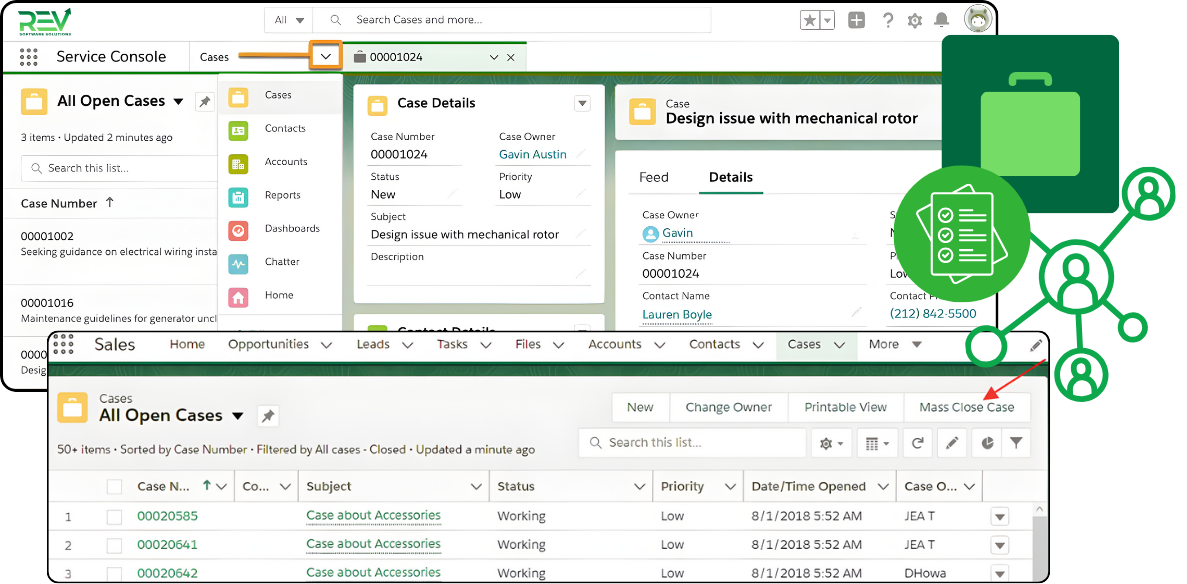
In The REV, cases exist to organize workflow, reduce follow-ups, and create clean, usable data that improves forecasting and reporting. When used correctly, they save time instead of adding it.
So the real question isn’t Do cases make sense? It’s Which cases make sense for the work you already do?
What a Case Really Is in The REV
At its core, a case is a report of information tied to real sales activity.
Every case connects back to the people and details that matter:
-
Dealer
-
Manufacturer
-
Customer
-
Opportunity or bid
-
Quotes
-
Email conversations
Instead of information living in inboxes, spreadsheets, or someone’s memory, a case keeps everything in one place. That means less hunting, fewer follow-ups, and clearer visibility for everyone involved.
The REV uses specific case types to match common workflows in foodservice sales. Let’s walk through the ones you’ll use most.
REV Case Types
Estimating Cases
Dealer-requested pricing support, without the chaos.
Estimating cases are one of the biggest drivers of forecast accuracy. Instead of estimates living in email threads, The REV allows you to track estimated sales in a structured way. Creating Data Transparency and a clearer picture of what’s coming, without tracking down updates.
An estimating case typically includes:
-
Dealer account and contact
-
Inside and outside sales ownership
-
Deadline and bid details
-
The opportunity it supports
-
Quote information
-
Email conversation history
- And more
Purchase Order (PO) Cases
Visibility after the sale
PO cases solve one of the most common problems in foodservice sales: losing track of orders once they’re submitted. PO cases streamline communication and improve order tracking. They also support shipping reports and post-sale follow-up without digging through inboxes.
A PO case is attached directly to the bid or opportunity and provides:
-
Order status visibility
-
Full conversation history after purchase
-
A single place to track updates and changes
- And more
This makes it easier to answer questions like:
-
Where is the order right now?
-
Has it shipped?
-
Who last touched it?
- And more
Sample Cases
Simple tracking that supports follow-up
Instead of relying on memory or scattered notes, reps can quickly see what’s out, what’s pending, and where follow-up is needed. That leads to better conversations with dealers and customers, without extra effort.
They capture:
-
Who requested the sample
-
What was requested
-
Who created the case
-
The current sample status
- And more
Spec Credit Cases
Keeping projects on track and getting paid
Spec credit cases are all about organization and accountability. This workflow helps outside sales manage everything required to receive the credit they’ve earned. Nothing slips through the cracks as you track where the project stands.
By creating a case for each project, reps can:
-
Assign due dates
-
Track status from under review to completed
-
View all projects in one list
-
Follow up with all supporting information in one place
Cases Reduce Repeat Work
Streamline processes by capturing information once and making it usable everywhere else in The REV. One Click Reporting becomes possible because the workflow was organized correctly from the start.
-
Fewer “Can you resend that?” emails
-
Fewer status update calls
-
Fewer last-minute scrambles for information
If your team is already doing estimating, managing POs, tracking samples, and chasing spec credits, cases simply give that work structure.
When Cases Make Sense
Cases make sense when you want:
-
Clear ownership
-
Organized communication
-
Better follow-up
-
Smarter forecasting
-
Less manual tracking
No extra steps. Just better visibility and strategic impact.
Frequently Asked Questions
What are Cases in The REV?
Cases give structure to the work around a sale: estimating, purchase orders, samples, and spec credits. Each case ties to the dealer, manufacturer, customer, and opportunity, so information is captured once and status is visible to reps, managers, and support staff.
How do dealers see where a project stands?
Dealers connected through The REV see their projects and current status without status update calls. Quotes, orders, and follow-up live in one organized workflow, so "Where is the order right now?" always has an answer.
Who from my team should have a REV license?
Outside sales, inside sales, management, and marketing all work in The REV on one platform. Reps use it for planning, pipeline, and activity. Inside teams manage quotes, purchase orders, and samples through Cases. Leadership runs dashboards and one click reporting. Marketing runs campaigns from live pipeline data through REV Marketing Cloud.